

Also found this pupa in the garden, it was in the soil at the bottom of a rotting large wooden barrel/pot. As you can see it is rather large (1.5 inches at least). Any ideas what it might be or what to do with it. At the moment it is under some soil in a bucket in my garage. Really would like to know that this is.




9 comments:
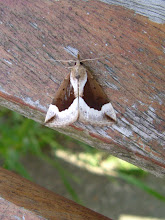
Hec Chris, that's a beauty.... I looked in the books at Yellow Horned (never seen one though). Looks right time of year but so not sure it fits entirely though the antennae colour looks good but the books I have don't show the orange on the wing - maybe it does so on a freshly emerged specimen ??
The Black Pupae is definetely worth rearing . Moth Pupae are not well documented but a few things point potentially to a Hawkmoth Pupae possibly the Lime Hawk-Moth (open to correction) . There is a strong similarity to the images on these links
see https://www.google.com/url?sa=i&source=images&cd=&cad=rja&uact=8&ved=2ahUKEwjzhd7Sq-bgAhUFUhoKHSVBC2IQjRx6BAgBEAU&url=https%3A%2F%2Fwww.sciencephoto.com%2Fmedia%2F733244%2Fview&psig=AOvVaw0WX7zbZK0djZ1s5AJenxFu&ust=1551715161977438
and http://www.uksafari.com/jpeg3/mothpupae2.jpg
What a beauty the orange ocelli (spot on wing) is very rare and I put it on a few moth web sites and no one has seen it before ...a real beauty...................
Put up the list at Ogden light ,,thanks ..
Chris give me a shout next time you are going into tunnel at Shibden..thanks
Thanks for the help - any idea what to do with the moth pupa - leave it, put it in a smaller box etc.
Chris
The orange ocelli is IMO relevantively unsusal or uncommon and bordering on a form
Tips on rearing Pupae can be found here http://www.uksafari.com/chrysalistips.htm
They pupate underground. In captivity they will pupate amongst folds of cloth or absorbent tissue. I'd like to say you cant buy it in the shops but some sites commercially sell them
This what should happen https://youtu.be/arAUDaQhW5E . The Pupae in the Chrysalis has already formed from the Caterpillar ( ( Egg Larvae , Pupae and Adult ) and will emerge in due course
Quote below UK Moths
flies in May and June, The larvae feed on lime (Tilia) as well as a number of other deciduous trees including birch (Betula), alder (Alnus) and elm (Ulmus). They are typically green with yellow stripes and a blue horn at the rear. When ready to pupate, they change colour to a dull greyish or purplish and begin to wander, looking for a pupation site. This is when they are most often encountered.
There have been no Yorkshire records of this orange type before..??
On the basis of a quick look this presentation is few and far between ( orange reniform and orbicular marking which is usually pale ) There are two subspecies (worldwide) Achlya flavicornis flavicornis, Achlya flavicornis jesoensisand two races which are defined by ground colouring. larger and darker var. scotica and Achlya flavicornis galbanus which I assume is the southern distribution Nothing noted on the orange "markings" variation but it would not be unlike the satelite with white and orange markings a noteworthy find , having said that a bus load will present in the near future
Chris,
Bring the pupa indoors and place it a medium sized plant pot or half litre yoghurt pot etc and keep in the shade. Line with tissue paper and secure a nylon over the top. Moisten pupa every day or so by misting or a couple of drops of water and wait for emergence.
Post a Comment