Not a definitive but an opinion to best practice all naturalists will have there own
Scops Often put to the back of the pile or ignored in the Field . I have thrown this post together as a holding page for various specimens as found .
General principles
Scopariinae are a difficult group to identify. Best to document fresh specimens when found as opposed to worn if an option on a catch. Worn moths if there is any uncertainty might best be reflected as Eudonia sp. Mines Rearing and Gen det are other routes to certainty.. Not applicable on Calderdale Moths but it is suprising how many experts sometimes dont validate there own observations.
Validation can include vouchers for Gen Det , Shared Imaging for Confirmation by Experience , Never give an officer a map share the route and get there without hitch . A second opinion never goes amiss , respect others on the journey. The use of Keys see below is usually a good way of whittling down the options but even the best keys sometimes yield ambiguity
Identification in the loose sense can be express to family , genus or species. It can vary with confidence from Certain, to Likely at various levels based on a number of factors including similars , markings , size , foodplants , etc and of course in some moths dimorphism ( male / female differences )
Best to use taxonnomic keys. These links are good pointers to serious Scoppers
Guide to Scoporiinae Keys
General Link
In respect of ground colour there is a great deal of natural variation amongst moths least alone images and it is not alone necessarily a reliable indicator I defer again to the statement Rearing or Gen Det to be absolutely certain
Scopariinae are a difficult group to identify. In some cases it is just not possible from a look or photograph to identify
General principles
Scopariinae are a difficult group to identify. Best to document fresh specimens when found as opposed to worn if an option on a catch. Worn moths if there is any uncertainty might best be reflected as Eudonia sp. Mines Rearing and Gen det are other routes to certainty.. Not applicable on Calderdale Moths but it is suprising how many experts sometimes dont validate there own observations.
Validation can include vouchers for Gen Det , Shared Imaging for Confirmation by Experience , Never give an officer a map share the route and get there without hitch . A second opinion never goes amiss , respect others on the journey. The use of Keys see below is usually a good way of whittling down the options but even the best keys sometimes yield ambiguity
Identification in the loose sense can be express to family , genus or species. It can vary with confidence from Certain, to Likely at various levels based on a number of factors including similars , markings , size , foodplants , etc and of course in some moths dimorphism ( male / female differences )
Best to use taxonnomic keys. These links are good pointers to serious Scoppers
Guide to Scoporiinae Keys
General Link
In respect of ground colour there is a great deal of natural variation amongst moths least alone images and it is not alone necessarily a reliable indicator I defer again to the statement Rearing or Gen Det to be absolutely certain
Scopariinae are a difficult group to identify. In some cases it is just not possible from a look or photograph to identify
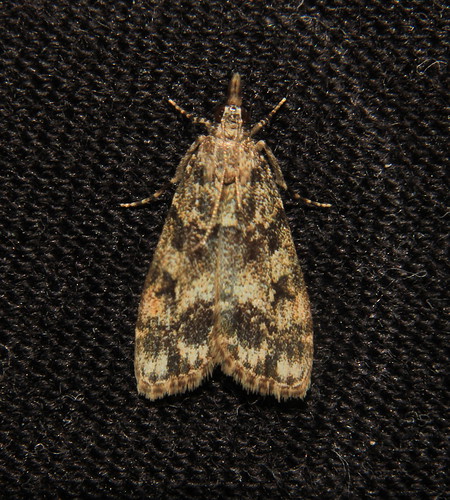
This one Looks to me to be one of the more discernible of the Scopariinae, ... Eudonia lacustrata. There are probably 3 when studied can yield a high confidence to ID visually another 63.069 BF1342 Eudonia angustea with its narrow wings and markings being relatively distinctive
ABH 63.067 BF1338 Eudonia lacustrata






3 comments:
Very helpful those photo's Colin. They are a tricky bunch. I usually give up on them and just make a note of how many and try getting photo's if they permit. I keep going back to them but the shots you put on are very useful pointers. Cheers.
see links and keys David not included I'll add to this post Scops and Eudonia as found
Thanks for the link to British Lepidoptera Colin, never knew it existed. It's very detailed and definitely gives you a different slant on ID-ing moths.
Post a Comment