
A fantastic night last night just sat out in the garden with a head torch, net and (mega-slow) Coolpix camera. Several new species for the garden were seen plus one totally new one. This True Lover's-knot feeding on Buddleia was a big surprise. Maybe breeding on cultivated heathers.


Another nectarer was this Old Lady which only hung around for one pic. A MASSIVE moth compared to the usually fare.

Even a grass moth was found nectaring - Crambus pascuella.

Heart and Dart plus a Copper Underwing species looking on.
Also Phoenix was new to the garden plus a few more regular species.
It really is worth planting nectar rich plants such as Buddleia, Heleniums, Verbenas etc, if you don't get much on them by day you might be surprised what visits them by night.
Also had a Hummingbird Hawkmoth in the afternoon feeding right in front of me on the Verbenas - brilliant stuff.

Two moths were netted which are unidentified so far - this dart species and...........

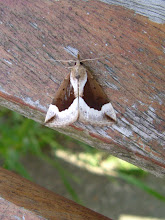
It's very rare I get a new Pyralid away from the traps so this Phycitodes (?) species is exciting. Forewing 9mm. Same moth below. Anybody any ideas on these two??????




6 comments:
mACRO LOOKS LIKE pURPLE clAY..
maritima.....
Bang on guys it looks good to me 62.057 Phycitodes maritima (Chalk Knot-horn) Good Call Andy
https://britishlepidoptera.weebly.com/057-phycitodes-maritima.html
Thanks for the input guys but you have confused me even more. Harry has just gotten back to me and agrees with your diagnosis but UK moths and the text books say maritima/saxicola need dissecting. Had another one last night with a FW of 10.5mm - might be breeding locally.
I'll keep you posted on the outcome.
Yes as per British Lep - some exclusions can be made but its all about Confidence level It is " Likely this but I cant be sure " as opposed to "I am sure as I can be" or "I am Certain " You have a tenuous ID not an absolute one , Brit Leps say
ID: Phycitodes binaevella/saxicola/maritima and Homoeosoma nebulella/nimbella all show a similar forewing pattern of a chalky white costal half, brown dorsal half, first line reduced to black dots, and a pair of black discal dots.
P.binaevella and H.nebulella can be excluded on size and forewing marking but the remaining 3 species require genital dissection for confident identification.
Addenda - a tenuous ID might be OK for a Blog providing no one accepts or asserts it absolute - but to be accepted as a record it is going to need the donkey work on a Gen Det
Post a Comment