Tuesday, 26 January 2010
New Blogg
Ive added a link to wildyorkshire which is Derck Parkinsons blogg.I look forward to reading this blogg about moths and leafmines ,derek has helped us out on this blogg on many occasions.The growth of bloggs on Moths is a great source of information to us all.Andy


Sunday, 24 January 2010
Search those tunnels near You,!!!!!
This eaxtract is taken off the Yorkshire Moth yahoo group and should be interesting to all who read this Blogg...many thanks to Yorkshire Yahoo and C.Fletcher for this post......
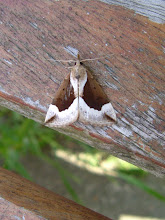
I've never thought of looking in the Serpentine Tunnel
before but now you mention it, it's an obvious site for Heralds.
It's a great time of year for looking
in caves, tunnels etc with a good torch to see what is about. One particular
cave in the Dales has over 200 Tissues hibernating at the moment, and this
species may well occur in other parts of the county - don't think it just occurs
near buckthorn. The books are likely to be wrong and it uses other foodplants.
Heralds turn up in all sorts of places such as garden sheds and outhouses so you
might find them at home.
Red-green Carpet is interesting. Out of 1500+ records on the database the only
one I can find of hibernation is one inside a bird hide in February a few years
ago, so we know very little about where most of them hibernate. The only other
hibernating species on the database is Tawny Pinion (two records) so where do
all these over-wintering moths shelter from the frosty weather?
So if anyone is at a loose end, do take a torch and explore some local nooks and
crannies!
I've never thought of looking in the Serpentine Tunnel
before but now you mention it, it's an obvious site for Heralds.
It's a great time of year for looking
in caves, tunnels etc with a good torch to see what is about. One particular
cave in the Dales has over 200 Tissues hibernating at the moment, and this
species may well occur in other parts of the county - don't think it just occurs
near buckthorn. The books are likely to be wrong and it uses other foodplants.
Heralds turn up in all sorts of places such as garden sheds and outhouses so you
might find them at home.
Red-green Carpet is interesting. Out of 1500+ records on the database the only
one I can find of hibernation is one inside a bird hide in February a few years
ago, so we know very little about where most of them hibernate. The only other
hibernating species on the database is Tawny Pinion (two records) so where do
all these over-wintering moths shelter from the frosty weather?
So if anyone is at a loose end, do take a torch and explore some local nooks and
crannies!
Thursday, 21 January 2010
Friday, 15 January 2010
Wednesday, 13 January 2010
Butterfly migration mystery solved
Scientists with the charity Butterfly Conservation believe they have solved one of nature’s long-standing mysteries – thanks to the help of the public.
Every year Painted Lady butterflies arrive in the UK from North Africa and the Mediterranean. It has long been known that they breed here during the summer and also that they cannot normally survive our winters. What happens to these Painted Ladies as winter approaches was unknown until now.
Scientists had been baffled as to whether Painted Ladies attempted to “tough it out” and died trying during our winters. Or was there a return southward migration to warmer climes, as is the case with Swallows, Cuckoos and Red Admiral butterflies? Part of the problem has been that, unlike these other well-known migrants, there was very little evidence of Painted Ladies flying south in the autumn.
This summer was a bumper migration year with, at the peak, up to a billion Painted Ladies in Britain.
Butterfly Conservation has been monitoring Painted Lady movements since the start of northward migration at the beginning of the year, with members of the public being able to report sightings online at www.butterfly-conservation.org. There has been a huge response, not only from the UK but from across Europe. An amazing 12,000 sightings have been submitted so far, with reports still coming in.
Last month brought some particularly exciting reports. From the Channel coasts of Cornwall, Devon, Sussex and Kent sightings were reported of Painted Ladies heading straight out to sea towards continental Europe.
Now reports have been received of butterflies arriving back in the Mediterranean and North Africa.
Richard Fox, Butterfly Conservation’s surveys manager, said: “Several of these lucky observers saw more than one butterfly head out on its perilous voyage. This is exactly the evidence needed to lay this enduring mystery to rest. Painted Ladies do return southwards from Britain in the autumn enabling the species to continue its breeding cycle during the winter months”.
Thanks to Yorkshire Butterflies for this info.
Every year Painted Lady butterflies arrive in the UK from North Africa and the Mediterranean. It has long been known that they breed here during the summer and also that they cannot normally survive our winters. What happens to these Painted Ladies as winter approaches was unknown until now.
Scientists had been baffled as to whether Painted Ladies attempted to “tough it out” and died trying during our winters. Or was there a return southward migration to warmer climes, as is the case with Swallows, Cuckoos and Red Admiral butterflies? Part of the problem has been that, unlike these other well-known migrants, there was very little evidence of Painted Ladies flying south in the autumn.
This summer was a bumper migration year with, at the peak, up to a billion Painted Ladies in Britain.
Butterfly Conservation has been monitoring Painted Lady movements since the start of northward migration at the beginning of the year, with members of the public being able to report sightings online at www.butterfly-conservation.org. There has been a huge response, not only from the UK but from across Europe. An amazing 12,000 sightings have been submitted so far, with reports still coming in.
Last month brought some particularly exciting reports. From the Channel coasts of Cornwall, Devon, Sussex and Kent sightings were reported of Painted Ladies heading straight out to sea towards continental Europe.
Now reports have been received of butterflies arriving back in the Mediterranean and North Africa.
Richard Fox, Butterfly Conservation’s surveys manager, said: “Several of these lucky observers saw more than one butterfly head out on its perilous voyage. This is exactly the evidence needed to lay this enduring mystery to rest. Painted Ladies do return southwards from Britain in the autumn enabling the species to continue its breeding cycle during the winter months”.
Thanks to Yorkshire Butterflies for this info.
ON line Recording.
If you click on the link you can now add your records on line ,please have a go and see if it works.Thanks to Nigel Kerwin for the knowledge
Tuesday, 12 January 2010
Bramham YNU Lepidoptera Group meeting
Hi all ,I am going to try and make the YNU meeting at Bramham this year I think its in March usually,If anyone else fancies it, we could try and get a car load together.??
National Moth Night 2010 + gen det
National Moth Night is on Sat 15th May at Shibden/Cunnery Wood. We will have a couple of moth traps going(hopefully more) + a bat walk. All welcome to this event.Lets hope its not snowing.?
Had a go at a bit of gen det today and id a male Grey Pug caught at light at Cunnery Wood on the 6th May 2009.And 1 Copper Underwing caught at light Northowram in September.The 5 female type pugs I could not id.
Had a go at a bit of gen det today and id a male Grey Pug caught at light at Cunnery Wood on the 6th May 2009.And 1 Copper Underwing caught at light Northowram in September.The 5 female type pugs I could not id.
Early Moth...??????
1960 Early Moth Theria primaria (Haworth)
There are 4 old records the last in 1963 and recent records from Park road elland between mid january and mid march.The flight time for this species is January and February when few light traps are run.The foodplant is hawthorn and a careful search may reveal this species to be present.They can be seen at dusk at rest on bare open twigs of foodplant.The female is flightless
There are 4 old records the last in 1963 and recent records from Park road elland between mid january and mid march.The flight time for this species is January and February when few light traps are run.The foodplant is hawthorn and a careful search may reveal this species to be present.They can be seen at dusk at rest on bare open twigs of foodplant.The female is flightless
Friday, 1 January 2010
Subscribe to:
Posts (Atom)