
2229 Brindled
Ochre Dasypolia templi (Thunberg, 1792)
This once common resident was found in 1883
around the new gass lamps and 100 + at gas lamps in Halifax in 1897.Was said to
still occour up until the early 1960’s but no records since this date.
Collinsonn wrote in 1963 the following article..-
The
Yorkshire list states that nowadays this species is rarely recorded except on
the East coast. Fortunately it does still occur in our Parish, though rarely. I
have recorded three in recent years. It was once a feature of the Halifax
Parish and collectors came from far afield to obtain it. There is a rather
amusing story told in this respect. The Brindled Ochre emerges from the pupa in
autumn. After some flight it seeks out a suitable place for hibernation until
the Sallows are in bloom the following spring, at which time it reappears to
carry on the species. A very suitable place for hibernation, and perhaps a
reason why it so favoured our area, was between the stones of our drystone
walls. A party of Lancastrian naturalists, apparently aware of this fact, crossed
the border and were busily engaged taking down a wall in search of hibernating
Brindled Ochres when the irate farmer appeared. He was unmoved by their pleas
of scientific research and in due course they received fines from the local
magistrate. The case caused quite a stir in more than naturalist circles and at
least one national newspaper carried the headlines "The Case of the
Butterfly Hunters." Unfortunately since those days the species has greatly
declined. It is probable that this is one of the few species which we can
definitely say has been reduced in numbers by the coming of modern street
lighting.
Our
old records read as follows:-
1883
Abundant round the new gas lamps. 1897 Over 100 at the gas lamps in Halifax.
These
entries tell a sad story. It was interesting in 1946, whilst Sallowing
(searching the flowering sallows for Spring specimens) with Stanley Sunderland,
to have one of these moths actually settle on me. It proved to be a female and
laid some eggs. The resulting larvae became the subject of one of a series of
articles.
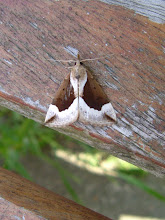
The Brindled Ochre has not been recorded since 1963/4 in our area and has become very rare in VC63.We have looked for this species for the last 10 years and believed that there must be a small population still surviving in Calderdale and this record proves that...well chuffed...Martyn ,Andy and Bri
The Brindled Ochre has not been recorded since 1963/4 in our area and has become very rare in VC63.We have looked for this species for the last 10 years and believed that there must be a small population still surviving in Calderdale and this record proves that...well chuffed...Martyn ,Andy and Bri



8 comments:
brilliant and you were spot on with the id Andy, great stuff
First record for VC63 since 1978.
Another reported last night from Wharfdale,,,thanks Charlie Fletcher
Well done Andy, what a find! A fascinating history for this species and even more so now you're part of it.
Brian let it go after a couple of photos on a large patch of Hogweed, where it will hopefully lay its eggs........
excellent info and a great find gentlemen.
Running a light is a double-edged sword; on the one hand you wouldn't have recorded this species in the first place but on the other, with singletons, you've no idea how far they've travelled from their breeding grounds.
Hopefully this will be the first of others to show up.
I reckon most (99%) of the moths we have recorded at light at the crags have come less than half a mile. The other 1 % have come off the moors...I don't think we have had any migrants yet.??
Post a Comment