Red Sword-grass
Hebrew Character (Pictured)
Clouded Drab
Common Quaker
Small Quaker
Diurnea fagella (Melanic Form)
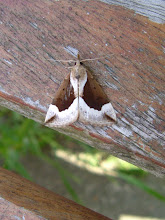
Pug Species (Pictured)
can anyone help me with this last one?


This blog has been set up so local people can find out what is going on in the world of Moths, Butterflys and dragonflies in Calderdale.If you have any ID problems put up your photo's and someone will try and help you to id it.


6 comments:
I usally get Brindled Pug first/this time of year but,the pic is not showing .?I have recorded ,hebrew Character,Clouded drab,Common and Twin spot Quaker this week it looks good tonight,
Its a Pug :-))
I would go for a well marked Brindled Pug due to curve on leading edge of forewing, discal spot narrowly elongated, and time of year. Pugs are horrid to ID from photos and one misses the jizz of a live moth. I used to take a dozen or so well worn pugs from the trap each month, pop em in a pot with what I thought they were written on a lable and then freeze them until winter. I would then dissect them to see if I got the guesses correct. Pug larvae are just as confusing and just as hard to seperate at times which is rather unusual for lepidoptera as one can usually easily get a firm ID from the larval stages.
Please do not take my guess at an ID as a firm conclusion and record this as Brindled, seek other more exprienced opinions than my own first.
It,looks good for Brindled(now showing)but pugs are notoriously difficult to id.
Yes, I think you are right gentlemen. I am trying to take more notice of the Pugs this year and having had a careful look at them all again this looks like a Brindled. (one is on the trap now!)
Thanks
British and irish pug Moths by Riley and Prior,is a good book but somtimes adds more questions than answers.Disection is the only definate id on a vast majority
Red Sword Grass are always nice to see.
Post a Comment