Habitat Urban Non Planted Garden on a garden corridor
MV 120 w
74.007 BF2421 Scarce Silver-lines Bena bicolorana x1
20.011 BF0410 Argyresthia brockeella x1
70.283 BF1961 Light Emerald Campaea margaritaria x 1
70.243 BF1922 Swallow-tailed Moth Ourapteryx sambucaria x3

73.329 BF2102 Flame Shoulder Ochropleura plecta

73.084 BF2293 Marbled Beauty Bryophila domestica

70.278 BF 1956 Common Wave Cabera exanthemata

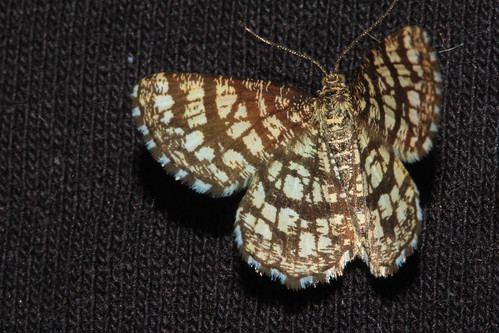
70.218 BF1894 Latticed Heath Chiasmia clathrata
63.018 BF1378 Anania coronata

73.002 BF2449 Dark Spectacle Abrostola triplasia
73.342 BF2107 Large Yellow Underwing Noctua pronuba x 14 +
73.329 BF2102 Flame Shoulder Ochropleura plecta x 2
70.226 BF1906 Brimstone Moth Opisthograptis luteolatax x 4

70.226 BF1906 Brimstone Moth Opisthograptis luteolatax x 4
65.009 BF1653 Buff Arches Habrosyne pyritoides x 2
73.012 BF243 Burnished Brass Diachrysia chrysitis x 1
73.012 BF243 Burnished Brass Diachrysia chrysitis x 1
72.003 BF2477 The Snout Hypena proboscidalis x 6+

The form tutti has the two vertical brassy bands on the forewing joined forming an “H-shape However the valid separate species named Diachrysia stenochrysis also has the two vertical brassy bands on the forewing joined “H-shape”. It is thought that the "H" needs to be at least 3 millimetres wide for it to be considered stenochrysis

I have summarised and simplified the Form terminology
73.317 BF2089 Heart & Dart Agrotis exclamationis x 7
70.218 BF1894 Latticed Heath Chiasmia clathrata x 1
70.218 BF1894 Latticed Heath Chiasmia clathrata x 1
73.162 BF2321 Dark Arches Apamea monoglypha x 5
73.169 BF2343 Common Rustic Mesapamea secalis x 1
70.278 BF1956 Common Wave Cabera exanthemata x 2
73.267 BF2160 Bright-line Brown-eye Lacanobia oleracea x 1
73.267 BF2160 Bright-line Brown-eye Lacanobia oleracea x 1
70.133 BF1803 Small Rivulet Perizoma alchemillata x 2
70.049 BF1728 Garden Carpet Xanthorhoe fluctuata x 1
70.016 BF1713 Riband Wave Idaea aversata ab reamurata x 2
73.173 BF2337 Marbled Minor Oligia strigilis (Marbled Minor agg ) x3
73.002 BF2449 Dark Spectacle Abrostola triplasia x 1
72.002 BF2474 Straw Dot Rivula sericealis x 1
63.018 BF1378 Anania coronata x 1
63.080 BF1293 Chrysoteuchia culmella x 1
73.016 BF2442 Beautiful Golden Y Autographa pulchrina x 2
73.017 BF2443 Plain Golden Y Autographa jota x4
73.084 BF2293 Marbled Beauty Bryophila domestica x 1Pugs
49.156 BF1083 Marbled Orchard Tortrix Hedya nubiferana x3
Imaging To Follow
73.012 BF243 Burnished Brass Diachrysia chrysitis
73.017 BF2443 Plain Golden Y Autographa jota x4
73.084 BF2293 Marbled Beauty Bryophila domestica x 1Pugs
49.156 BF1083 Marbled Orchard Tortrix Hedya nubiferana x3
Imaging To Follow
73.012 BF243 Burnished Brass Diachrysia chrysitis
The form tutti has the two vertical brassy bands on the forewing joined forming an “H-shape However the valid separate species named Diachrysia stenochrysis also has the two vertical brassy bands on the forewing joined “H-shape”. It is thought that the "H" needs to be at least 3 millimetres wide for it to be considered stenochrysis
I have summarised and simplified the Form terminology
http://www.sussexmothdiary.co.uk/macsheets/73.012.htm
Cryptic BB Diachrysia stenochrysis A good visual here on the species split images summarised
http://grampybustard.blogspot.co.uk/2010/07/burnished-brass-split.html
Summary top Image joint = Cryptic
Middle Image Banded Intermediate need gen det or dna
Bottom Image separate BB
On the BB Forms BB aurea has sepaarte vertical bars see http://www.sussexmothdiary.co.uk/macsheets/73.012.htm
juncta with the dark band complete, and tutti with the thin connect 3 mm
Moths with the 2 bands joined clearly and distinctly to create an "H"... have been referred to as f. juncta
Moths refererable to juncta are regarded BY SOME AUTHORS as a seperate species, called Diachrysia tutti
Examples of tutti in which the cross-bar of the H is at least 3 mm wide MAY BE REFERABLE to the Eastern Palearctic species stenochrysis
The intermediates I think need strictly speaking needs DNA to establish there validity
70.283 BF1961 Light Emerald Campaea margaritaria

72.002 BF2474 Straw Dot Rivula sericealis

74.007 BF2421 Scarce Silver-lines Bena bicolorana
Cryptic BB Diachrysia stenochrysis A good visual here on the species split images summarised
http://grampybustard.blogspot.co.uk/2010/07/burnished-brass-split.html
Summary top Image joint = Cryptic
Middle Image Banded Intermediate need gen det or dna
Bottom Image separate BB
On the BB Forms BB aurea has sepaarte vertical bars see http://www.sussexmothdiary.co.uk/macsheets/73.012.htm
juncta with the dark band complete, and tutti with the thin connect 3 mm
Moths with the 2 bands joined clearly and distinctly to create an "H"... have been referred to as f. juncta
Moths refererable to juncta are regarded BY SOME AUTHORS as a seperate species, called Diachrysia tutti
Examples of tutti in which the cross-bar of the H is at least 3 mm wide MAY BE REFERABLE to the Eastern Palearctic species stenochrysis
The intermediates I think need strictly speaking needs DNA to establish there validity
70.283 BF1961 Light Emerald Campaea margaritaria
72.002 BF2474 Straw Dot Rivula sericealis
74.007 BF2421 Scarce Silver-lines Bena bicolorana
73.329 BF2102 Flame Shoulder Ochropleura plecta
73.084 BF2293 Marbled Beauty Bryophila domestica
70.278 BF 1956 Common Wave Cabera exanthemata
70.218 BF1894 Latticed Heath Chiasmia clathrata
63.018 BF1378 Anania coronata
73.002 BF2449 Dark Spectacle Abrostola triplasia

20.011 BF0410 Argyresthia brockeell

73.017 BF2443 Plain Golden Y Autographa jota


Marbled Minor (agregates ) - 3 Sims
Marbled Minor Rufous Tawny
At a guess 1 & 2 possibly but NEEDS gen det especially their melanic forms, can only reliably be separated by dissection
Possibly 2339 Tawny Marbled Minor Oligia latruncula ABH 73.174



6 comments:
Great shots as usual. Appreciate the 'Y' tips Colin as have been struggling with several of these, especially those that look intermediate !
Have a look into the types of Burnished BrASS ( THINK THERE ARE 3 ??) very interesting and great post ..
Thanks Andy open to correction think its the conventional BB The other confusion species might be 73.011 [B&F: 2435] Scarce Burnished Brass (Diachrysia chryson) and 73.004 [B&F: 2433] Slender Burnished Brass (Thysanoplusia orichalcea) easily overlooked on afiner note
As you say or might have spotted or should I say H banded the forms of this are quite interesting and often overlooked added some notes under the entry above The form tutti has the two vertical brassy bands on the forewing joined forming an “H-shape which also occur at Cromwell. However the valid separate species named Diachrysia stenochrysis also has the two vertical brassy bands on the forewing joined “H-shape”. It is thought that the "H" needs to be at least3 millimetres wide for it to be considered stenochrysis. Rulers out everyone .HTH
if you put Burnished BRASS into the search at the top there are some older posts from 2010 and 2011 showing all 3 are seen in this area....cheers
Ah Missed that Andy Yes excellent notes and post Here are a few visuals I have summarised the Form terminology and in its simplest is seen here http://www.sussexmothdiary.co.uk/macsheets/73.012.htm
Cryptic BB Diachrysia stenochrysis A good visual here on the species split images summarised
http://grampybustard.blogspot.co.uk/2010/07/burnished-brass-split.html
Summary top Image joint = Cryptic
Middle Image Banded Intermediate need gen det or dna
Bottom Image separate BB
On the BB Forms
BB aurea has sepaarte vertical bars see http://www.sussexmothdiary.co.uk/macsheets/73.012.htm
juncta with the dark band complete, and tutti with the thin connect 3 mm
Moths with the 2 bands joined clearly and distinctly to create an "H"... have been referred to as f. juncta
Moths refererable to juncta are regarded BY SOME AUTHORS as a seperate species, called Diachrysia tutti
Examples of tutti in which the cross-bar of the H is at least 3 mm wide MAY BE REFERABLE to the Eastern Palearctic species stenochrysis
The intermediates I think need strictly speaking needs DNA to establish there validity
The links above are clickable from within the post HTH
Post a Comment