Tuesday, 13 May 2008

Hi All,
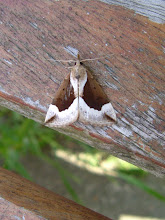
Is this accommodation suitable for my Ribwort Plantain resdents?


Winston

Last Nights moths


1 Ancylis badiana
1 light Brown apple moth
1 Yellow barred brindle
1 flame Carpet
1 Hebrew Character

Monday, 12 May 2008

Hi All,
Had a micro in the trap I am unfamiliar with 2 nights ago... here it is


Now, coincidentally it looks very similar to the one in Andrew and Loras recent post, i.e. Mompha subbistrigella as identified by Charly. But Charly, whilst the legs etc look right , the wings especially the white areas don't look the same as the pics on the uk moths site? can you help?
Winston

Saturday, 10 May 2008

Pine Beauty


Another quiet night despite the warm weather - is it too clear? - but I did have one of my favourite moths, this Pine Beauty, also Early Grey, Brindled and Double-striped Pug.


Can anyone help with the i.d. of this Pug I had on Thursday night? It was very small and after consulting the pug id book I think it may be a Dwarf Pug

Friday, 9 May 2008

Moth Trap

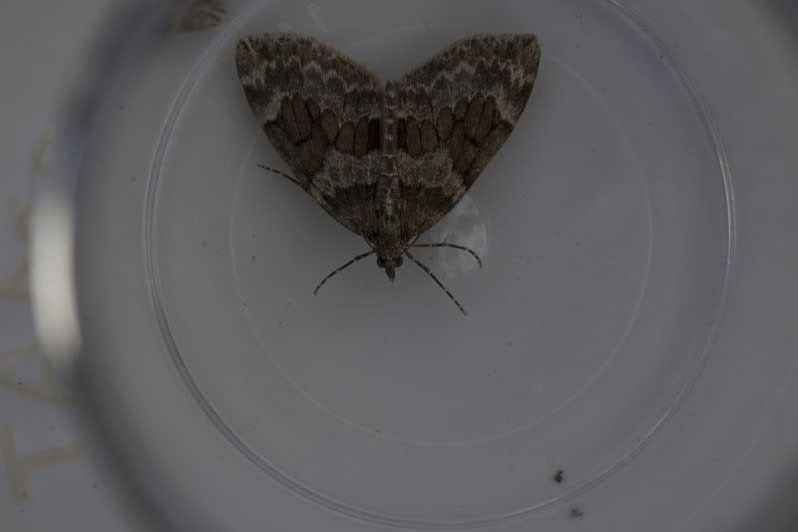
Had a quick go with the moth trap last night thanks Andy. Had it on from about 8.30 - 12.30 and duly went out early this morning to see what was there and took some photos. The ones below are in the sample containers and I then tried some more natural looking ones with the 3 bigger moths - 1 flew off straight away, the others weren't too bad - maybe it wasn't cold enough at 6am this morning? lol Anyway I forgot just how small the depth of field is with a macro lens but some came out OK, these ones are clearer though. Have not had chance to look them up yet but here we go.......

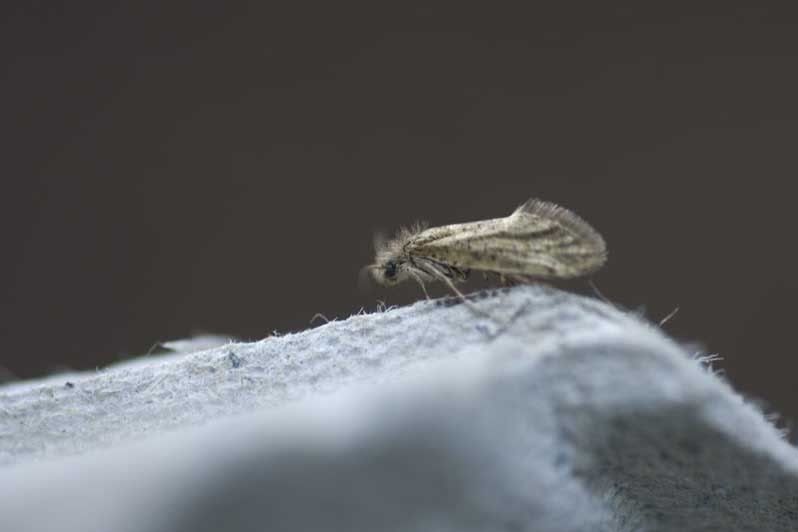
First the 2 very small ones, about 5mm long at a guess.


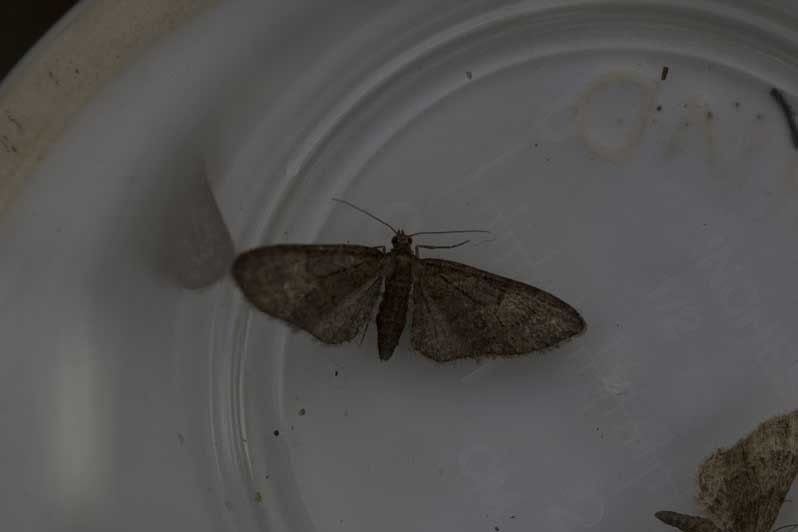
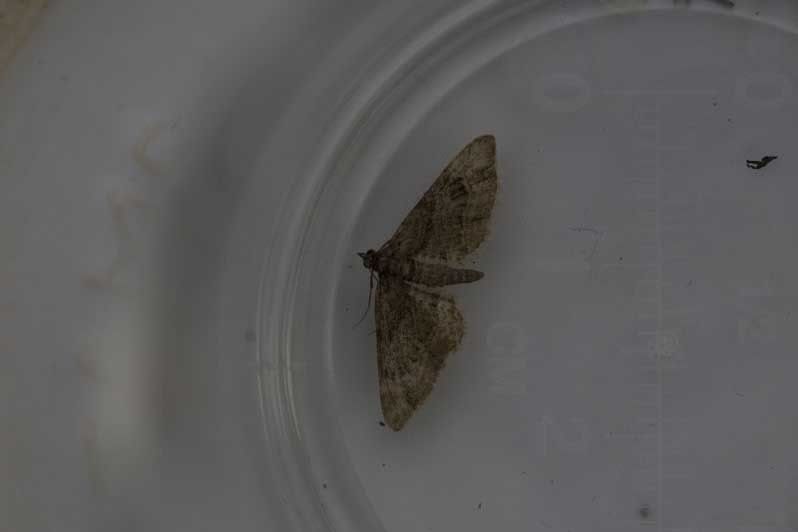
Then the bigger ones - 3 in all


Thursday, 8 May 2008

my house

had 1 peackock over today

Wednesday nights moths in Calderdale


Last night seemed a good night with more midges than I have seen on any night this year but sadly, only

Pale Pinion 1
Common Quaker 1
E. Subpurpurella 6

Total - 8

Winston, Hebden Bridge

P.S. During the day however I saw my 1st Holly Blue of the year in Hebden

(Add to this thread with your trappings if you like)

Cromwell Bottom 5th May


First time out looking for butterflies... and its taken me 3 days to get round to posting it! lol


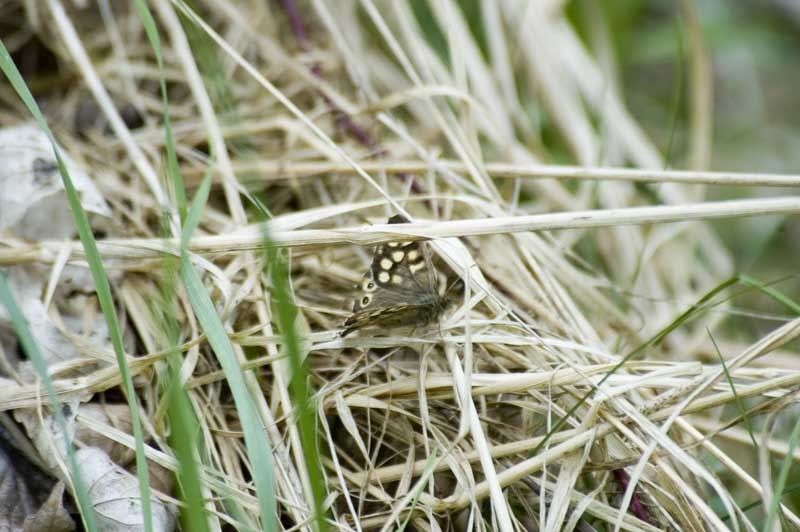
Tried Cromwell Bottom and had plenty of small tortoiseshells, couple of peacocks and a speckled wood (I think - first for me). Also had possible a female orange tip though no clear views as was flying way too fast and didnt settle. There was also a much smaller white butterfly?


Very sunny day and nice to be out, butterflies didnt seem to want to co operate with having their photos taken much mind - someone told me that its best to go in the evening as they are settling in for the night?


Wednesday, 7 May 2008

Last Nights moths


This Yellow Barred Brindle was new for me up here,and seems to be recorded at light throughout our area.

Tuesday, 6 May 2008

Sunshine


Loads of Speckled Wood today at CB and Copley,also Orange Tip ,Peacock and Small tortoiseshell.Swarms of Eriocrania subpurpurella numbering 500 +,3 larval cases swept from heather which may be Coleophora pyrrhulipennella also Coleophora cases on birch and larvae on bilberry.Excellent to be out in the sunshine.

Water Carpet


Despite looking like a promising night last night there was only a Clouded Drab in the trap. But it was keeping company with this Water Carpet Lampropteryx suffumata. A new moth for me and one for which there doesn't seem to be that many records.
Winston

Monday, 5 May 2008

465 Plutella porrectella


Spotted one of these at altitude today whilst out mountain biking. It was in a grass verge above Sowerby near to Crow Hill. The larvae feed on Dame's violet (Hesperis matronalis) and are usually on just about any patch you find

Help with Pugs

Can anyone help me with the i.d. of these two Pugs, both caught on Saturday night, I think one is a Brindled Pug and the other Double-striped Pug. The Brindled was much larger than the DSP, although they both look very similar

Double-striped Pug (?)

Brindled Pug (?)

Saturday, 3 May 2008

ogden

large white
2 small tortoiseshells
1 peackock

Friday, 2 May 2008

Twenty-plume Moth (Alucita hexadactyla)


Lots of the adults of this species around in my garden on Honeysuckle at the moment. Anywhere in Calderdale that has Honeysuckle (including cultivated forms in gardens etc) should have adults on it now. I watch this species every year in the garden at this time on my various Honeysuckle cultivars. The life stages are easy to find and its especially easy to find as larvae over the next few weeks. All you need to do is find Honeysuckle in Flower and look for either a hole chewed in an unopened flower or look for an unopened but rather dirty off white looking flower (caused by the larva's frass).


Ben Smarts image shows the damage rather well.

North Dean Woods

Anyone up for a daytime trip round North Dean next week ? Evenings are not good times for me as I usually get a lot of customer enquires in the evenings and thus its my busiest time of day. In North Dean by next week (assuming the warm weather holds up) I would expect to find quite a lot of different larvae, some Coleophorid cases and perhaps the first leaf mines of the seasons.

I have a couple of hand nets, a sweep net and most of the other gear needed to mount a decent search. As I travel by cycle usually I would appreciate a lift if anyone else fancies coming along. Any day is fine by me, morning or afternoon.

Butterflies so far

Its been a slow stat compared to last Aprils record temps but at last there seem to be a few butterflies about.Comma,Speckled Wood ,Small Tortoiseshell,Peacock and Orange Tip have been seen this week at Cromwell Bottom and there have been a few reports of Brimstone from the Todmorden area.I am almost sure I saw a Green Hairstreak fly by at Ringstone this morning but I could not relocate it.

Cromwell Bottom Map


Andy has given me a map of Cromwell Bottom. I have scanned it and put it up here so people can refer to it and the areas mentioned in various posts on this blog. If anyone wants a better copy I can email it to them if they supply their email address.

Winston

Thursday, 1 May 2008

Sunday

Sunday night looks good for Cromwell Bottom/Copley woods if anyone is interested.

Wednesday, 30 April 2008

Cromwell Bottom Today. 30th April


Called in at Cromwell Bottom on the way home from work today. Saw 5 Peacocks, this one looking interested in a house brick, 3 speckled woods looking fresh and chocolate brown and a whole host of Eriocrania Subpurpurella.

Winston

Tuesday, 29 April 2008

Plantain Leaves

Found my first signs of possible Aspilapteryx tringipennella today in Hebden Bridge after being shown what to look out for in Pauls Post. (Thanks Paul) will try to rear through.
Winston

Butterflies


10 peacock,4 small tortoiseshell and my first male orange Tip today at Cromwell Bottom.

Sunday, 27 April 2008

A few Moths from a Pellon garden

At last spring has finally arrived and last night (Saturday) was a good one with,

Early Grey
Hebrew Character
Common Quaker
Twin Spotted Quaker
Red -green Carpet
Silver Y
Brindled Pug and
Early Tooth-striped

Red-green Carpet


Early Tooth-striped


Early Grey

Brindled Pug

Thursday, 24 April 2008

Micro for Id


Tawny Pinion Lithophane semibrunnea


I been hopeing for one of these for the last couple of years,they were first recorded in Yorkshire at Spurn in 1984 and in VC63 in 1997 at Wintersett and have been becoming more widespread each year.i carnt find any other Caldedale records but there must some.??

Wednesday, 23 April 2008

caterpillar

found 1 wlaking home from school.
wooly bear (i think)

Micro for Id

Cromwell Bottom last night


Well it was nice to meet Charlie and Winston at CB last night but there were few moths about .We found plenty larvae on Ribwort Plantain by the weir and found a very nice V-Pug(pic).A micro to id and a few that got away.hebrew Character ,Twin spot and Common Quaker + early Grey at Northowram.See you all there next week.

Tuesday, 22 April 2008

Test photo


Had small tortoiseshell and Peacock today in and around the garden.

Monday, 21 April 2008

Tuesday,Cromwell bottom

Hi all,lets meet at the car Park by Crowther Bridge at 7ish,I will pop down and sugar a few trees , I am sure PT can tell us some good spots to have a look at Tag Loop and Tag cut should be good.The wind seems to be easing and the temp improving.

Thursday, 17 April 2008

April Larval Tips 3 Cocksfoot Moth Glyphipterix simpliciella


I found lots of the larval signs of this species at Cromwell Bottom this morning. I would probably have given this out as a winter tip this year but as its still so cold the adults will not yet have emerged. In practice one looks for the tall brown steams from last year in the middle of a clump of Cocks Foot Grass (Dactylis glomerata), and searches for the small emergence holes bored by the larvae for ease of emergence as an adult. I did not take and open any of the stems this morning as I have reared this species through before. If you wish to rear some through, all you need to do is cut some stems well below the holes and stick them upright in a lump of florists oasis in some sort of clear container with a mesh top (pop socks) and await the adults.

The adults will be around shortly once the weather warms up and its usualy dead easy to find them on any yellow flowering plant such as buttercups or dandelions. Just to make my "tips" clear, they are not "my tips" anymore than anyone elses, I have simply read up and gone out looking, most of the tips will have been available since Victorian times so they are not "mine".

PS I note a distinct lack of postings on this blog at the moment, there are absoloutely loads of moth species you can find even in a spring as poor as this one, as long as you do not rely on light trapping alone, so come on people lets have some posts from those prepared to have a 10 min walk to find larvae or pupae.Moss, lasts years dried stems and seed heads are stuffed full of goodies at this time of year if you are prepared to look.

Tuesday, 15 April 2008

April Larval Tips 2..On Nettles


Two very common micros on Nettle as larvae now are; 385 Anthophila fabriciana and 1405 Mother of Pearl Pleuroptya ruralis. Which just goes to show how silly the so called division between "macros" and "micros" is , A.fabriciana is very small and P. pleuroptya is as big or bigger than many macro moths, yet both are classed as micros !
I found plenty of spun together nettle tops this morning with both larvae in residence. It can be quite hard to separate the two as fabriciana (bottom photo) do not look as clearly marked as the ones shown from Ian Kimbers website. Both larvae are small and light green in colour in the early instars and only separate out to distinctive larvae as they get to the last instars. The easiest way to separate them by eye alone is that Mother of Pearl (shown in the top photo) are larger and a more translucent green, hard to describe but easy once you have seen both. At the moment the larvae are usually in the growing tips of very small nettles but as the plants grow the larvae tend to be found anywhere on the plant in a leaf spun closed. Lots of other species use nettle in this way later in the year but now I think you will only find the to species mentioned. Should you wish to rear both species they are dead easy, simply add fresh nettles leaves to the container as the old leaves shrivel and the larvae will move to the new leaves to spin up and feed. As a general rule for all larvea at this time of year look for trees or plants that get plenty of sunshine as these tend to be the first ones with larvae whilst its still cold.

Monday, 14 April 2008

April Tips on Sallow

If you have a garage or outside shed, etc, now is the time to start collecting Sallow catkins which have fallen on to the ground from the Sallow trees. Many of these fallen catkins will often contain various Tortricidae, Geometridae and Pug larvae. The way to check the catkins for larvae is very easy. Simply spread them out on white kitchen roll in some seed trays or similar, no need for any sort of lid at this stage. If you keep checking the catkins you will see signs of frass appearing on the white kitchen roll under the occupied catkins. Once you find these move them to a lidded container and keep an eye on the situation. The larvae may need fresh catkins adding and then as soon as the sallow leaves are out pop some leaves in the tub with the occupied catkins. Some catkins will have only one species and some will have more than one species on/in them. Most of these are fine kept together until they are large enough to ID. The only exception to this are Pug larvae which I find are mostly cannibalistic even when enough food is present, if you want more than one survivor its pays to house pug larvae in solitary confinement ! Its great fun with catkins at this time of the year as you never know what you might find and rear through.

We are now getting close to the one of the best times of the year to find moths on natural food sources. Any night now when its cloudy and reasonably mild its the time to go "Sallowing". This is one of the great classic tecniques used before the advent of MV lights to collect large numbers of moths in one place. Cromwell Bottom is an ideal place to try this out but any area with large numbers of Sallow in bloom is fine. You simply stick a few pots in your pocket, pack a decent torch and a butterfly net. In practice one simply walks around shining the torch on Sallow catkins until you pick out a moth feeding, they can usually be spotted by the light reflecting off their eyes. One a good night there can be hundreds of moths on each Sallow bush, but often around here one is lucky to get a few dozen per bush. If its moth sp you wish to confirm or look through a hand lens its usually dead easy to simply pop the net over them and tap them off the catkins. They are mainly Orthosia spp, but also Chestnut, Satellite, perhaps some Thorns and Pugs. The only other time of year when one can get the same effect with natural sources is in autumn when you search Ivy Blossom in the same manner.

Assuming that at various points over May I will still be around Calderdale during the week is anyone intersted in some daytime larval beating sessions at this time ?

Sunday, 13 April 2008

April Larval tip 1...Aspilapteryx tringipennella


I shall now post some tips of what to look for in the coming weeks as and when I get the chance depending on work and my move to Wales. Most of the tips will be related to the larval stages of micros as that is my own entomological passion. All will be of species I have found previously in Calderdale or I expect to be found in Calderdale. Its would help records for the area if people do have a look for these as in many instances I may only have found them near my home in Elland and have no idea of their distribution or otherwise in Calderdale.
The larva should now be around in some numbers in the next few weeks of Aspilapteryx tringipennella in Ribwort Plantain (Plantago lanceolata), a very common "weed " of waste ground throughout Calderdale. As can be seen from the photo (courtesy of Ian Kimber) the larvae which have over wintered in the rootstock of the plant are by now spinning closed the plant leaf near the midrib causing it to close and form a "blister". Should you gently pull open one of these you will either find a larva feeding or a pupa. If you look at the bottom of the blister and see a small hole it means the adult has emerged. If the hole is covered with fine silk it means the pupa is still inside. The adults emerge through these pre-chewed holes when they emerge. This is a very easy larvae to find as I suspect it will occur right through Calderdale wherever the plant occurs. Look first on dry sheltered spots that get at least some sunshine in early spring. I will be amazed if you do not find it.

I used to have a favourite patch of Ribwort Plantain at Cromwell Bottom on Brookfoot loop. I used to bag this species every year first in this spot. Unfortunately its now been either dug up or buried under spoil from the 4 metre wide track being created around that part of the LNR. Even more ironically the one spot in all Calderdale in which I could guarantee to the males of Ghost Moth "leking" every year awaiting females was also in the now destroyed spot previously mentioned . This is even sadder as Ghost Moth is a LBAP species in Calderdale and its not been even protected on a Nature reserve !
So in one area of a LNR which is supposed to be protected and monitored we have lost colonies of:
Aspilapteryx tringipennella
Ghost Moth Hepialus humuli
Leucoptera spartifoliella

Friday, 11 April 2008

A poor week

Cold nights and wind and rain have made for a poor week.
1Aspilapteryx tringipennella
3 hebrew character
1 Early Grey
Bri had 5 satellite , 2 Chestnut and a Mottled Grey
Nowt else to report

Saturday, 5 April 2008

Another Plume


1Emmelina monodactyla,(pic)6 hebrew Character,Early Grey(first of the year about 1 month later than last year)and another Orange Underwing yesterday at Cromwell Bottom

Friday, 4 April 2008

Oak Nycteoline


Brian Leesey phoned me today to let me know he had recorded 2423 Oak Nycteoline last night (I think it was last night). I have recorded this in most months of the year (March-Nov) in Calderdale but only as singletons at light. A seemingly scarce species in Calderdale, but given the recent thread on the forum is it scarce or just overlooked ? Its actually one of the Noctuidae but due to its small size is often ignored as a large Tortrix which it resembles closely to the naked eye. It a very variable species but most specimens I have trapped have had very distinctive dark spots on the forewings (as had Brians), much "crisper and brighter" looking all over than the one shown (borrowed from Ian Kimbers site).

Thursday, 3 April 2008

Unknown Eriocrania

This Eriocrania species appeared last night in the light trap, anybody able to tell which one it is? (sorry the photo is rather poor)


Last Nights moths


1 Small Quaker,3 hebrew Character,2 common Quaker,1 brindled pug,2 Clouded Drab and this dactyla sp,which i will have to look up ,as i am off for a couple of days.?

Wednesday, 2 April 2008

Sunday 1st Butterfly

Sorry for late post but saw my first butterfly at the bottom of the path near the style that leads up through Avocet Wood, sp. Comma - photo's to follow.

Recent visitors

The following visitors have been attracted to the skinner trap over the last few days -

Red Sword-grass
Hebrew Character (Pictured)
Clouded Drab
Common Quaker
Small Quaker
Diurnea fagella (Melanic Form)
Pug Species (Pictured)

can anyone help me with this last one?