Wednesday, 16 April 2014

Copley meadow.

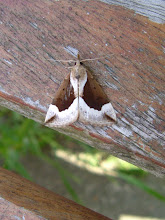
These Grapholita jungiella were pretty common this lunchtime flying in the warm spring sunshine. You wouldn't have thought that the grass blade was blowing quite violently in the breeze.

This one on oak in Bankhouse wood the day before.

Monday, 14 April 2014

New Camera

I thought it was about time for an upgrade so I bought a Panasonic Lumix FZ 200 with raynox lense. It can certainly produce some fine detail but the depth of field is minuscule even at F8. On the shot below the eye is nice and sharp but the nose is out of focus. If you consider these Eriocrania subpurpurellas are only 7mm in length I'll leave it up to you to work out the DoF.

It does take nice bird photos as well though!


Saturday, 5 April 2014

Brindled Ochre


2229 Brindled Ochre Dasypolia templi (Thunberg, 1792)

 This once common resident was found in 1883 around the new gass lamps and 100 + at gas lamps in Halifax in 1897.Was said to still occour up until the early 1960’s but no records since this date. Collinsonn wrote in 1963 the following article..-

The Yorkshire list states that nowadays this species is rarely recorded except on the East coast. Fortunately it does still occur in our Parish, though rarely. I have recorded three in recent years. It was once a feature of the Halifax Parish and collectors came from far afield to obtain it. There is a rather amusing story told in this respect. The Brindled Ochre emerges from the pupa in autumn. After some flight it seeks out a suitable place for hibernation until the Sallows are in bloom the following spring, at which time it reappears to carry on the species. A very suitable place for hibernation, and perhaps a reason why it so favoured our area, was between the stones of our drystone walls. A party of Lancastrian naturalists, apparently aware of this fact, crossed the border and were busily engaged taking down a wall in search of hibernating Brindled Ochres when the irate farmer appeared. He was unmoved by their pleas of scientific research and in due course they received fines from the local magistrate. The case caused quite a stir in more than naturalist circles and at least one national newspaper carried the headlines "The Case of the Butterfly Hunters." Unfortunately since those days the species has greatly declined. It is probable that this is one of the few species which we can definitely say has been reduced in numbers by the coming of modern street lighting.

Our old records read as follows:-

1883 Abundant round the new gas lamps. 1897 Over 100 at the gas lamps in Halifax.

These entries tell a sad story. It was interesting in 1946, whilst Sallowing (searching the flowering sallows for Spring specimens) with Stanley Sunderland, to have one of these moths actually settle on me. It proved to be a female and laid some eggs. The resulting larvae became the subject of one of a series of articles.
 The Brindled Ochre has not been recorded since 1963/4 in our area and has become very rare in VC63.We have looked for this species for the last 10 years and believed that there must be a small population still surviving in Calderdale and this record proves that...well chuffed...Martyn ,Andy and Bri


Friday, 4 April 2014

BOOM

663 Diurnea fagella 23
688 Agonopterix heracliana 4
701 Agonopterix ocellana 1
1760 Chloroclysta siterata Red-green Carpet 1
1775 Colostygia multistrigaria Mottled Grey 2
1852 Eupithecia abbreviata Brindled Pug 16
1881 Trichopteryx carpinata Early Tooth-striped 1
1930 Biston strataria Oak Beauty 3
2139 Cerastis rubricosa Red Chestnut 1
2182 Orthosia cruda Small Quaker 36
2187 Orthosia cerasi Common Quaker 85
2188 Orthosia incerta Clouded Drab 9
2189 Orthosia munda Twin-spotted Quaker 48
2190 Orthosia gothica Hebrew Character 3
2229Dasypolia templiBrindled Ochre1
2256 Eupsilia transversa Satellite 2
2258 Conistra vaccinii Chestnut 4

Thursday, 3 April 2014

Friday Craggs

Craggs usual spot Friday about 8ish...................

Tuesday, 1 April 2014

Small Tortoiseshell

After last years massive increase in numbers it was interesting  to see 14 today in the afternoon sunshine in the field opposite the  house ,  a long warm summer will surely re-establish this species to its former status. 2 Peacocks in the garden and 1 Diurnea flagella on the house wall. Planning a trapping session this Friday any ideas,?? Will post details later....

Sunday, 30 March 2014

March Round up ...Diurnea fagella


Again into the local woods for the month of march and after all the Dotted Borders at the beginning of the month,late March was the turn of Diurnea flagella to take the stage. The peak was on the 29th march with 185 seen with 35 pairs in cop located, I only found one female that was not melanic and about 50 melanics.Other species seen were ------

461 Ypsolopha ustella 1
663 Diurnea flagella 481
688 Agonopterix heracliana 12
1663 x March Moth 4
1852x Brindled Pug 2
1926x Pale Brindled Beauty 1
1932x Spring Usher 3
1934 Dotted Border  91
1934 Dotted Border (melanic ab. fuscata) 4
2182x Small Quaker 3
2187x Common Quaker 3
2256x Satellite 1
2258 x Chestnut 4
 

Monday, 24 March 2014

Bagworm hunt, Hardcastle Craggs, 24.3.14.

Brian and Andy get to work. The target species, which we found, was Diplodoma laichartingella, a rarely recorded species in Yorkshire but we suspect it is locally common in the area.These case-bearing larva are perhaps best found at this time of year in the characteristic hollows, slots and recesses around the base of Beech trees. A torch and kneeling mat are a necessity rather than a luxury.

Not surprisingly other lepidoptera were found including three of these Diurnea fagellas resting on the trunks.

It wasn't long before Brian relocated some of his earlier bagworm finds deep inside the hollows, often too deep and narrow to be able to get the camera close enough for some decent shots.

I would class myself as a reasonably experienced lepidopterist but even when I knew what I was looking at I could scarcely make out anything resembling a structure made by a moth larva. They resembled what they were I suppose, dried plant and animal debris. How Brian found these originally is remarkable.

I collected five cases for rearing purposes and all five contained larva.When disturbed they simply pick up their cases and walk off with them. Talk about everything apart from the kitchen sink on their backs!

The cases typically measure up to 10mm in length. The larvae will be given moss, lichen and some dead parasitic wasps ( that I'd reared earlier) to eat.

All in all we found 7 cases from Pecket Well clough and one from Middle Dean wood.
Thanks to Andy for the lift and Brian for his fantastic field skills.

Friday, 21 March 2014

Change of plan

We are meeting on Sunday at 12 in the crags car park, weather looks poor for Saturday.We have two sites to have a look at,,...Sorry for inconvenience......Andy

Thursday, 20 March 2014

663 Diurnea fagella

A cold n/w wind was blowing with sleet and rain making it feel very wintery as I walked down into the wood tonight again expecting little I was pleased to find 51 Diurnea flagella .They were mostly on beech upto about 4 foot , but 3 were on Oak and 1 on Sycamore. At least 10 were the melanic types and the only female I could find was a melanic type in cop with a normal type male. The only other species I could find was an adult Small Quaker resting on Beech out of the wind.
I only had chance to do about 1 third of the wood tonight...............................
On the 21st  57 Diurnea Fagella were found with 2 common and 1 Small Quakers and on the 22nd a beautiful Brindled Pug and 14 Diurnea flagella hiding low down out of the wind and driving sleet.

Bagworm Hunt.

Charlie, Bri and myself are going to Peckit Well  Wood on sat afternoon meeting at 1 o'clock in The Craggs car park, bring kneeling mat and torch if you have um.We are looking for Diplodoma laichartingella    which is a  not common species in Yorkshire but they have been recorded in this area this year so we are hopeful are seeing a few. They are found in the hollows at the bottom of Beech and oak.

Monday, 17 March 2014

Diurnea fagella

The first Diurnea fagella last night in the local wood was soon followed by 16 more , with one pair in cop and a good mix of 6 females and 8 males (6 melanic and 2 pale forms) all quite low down on Oak and Beech. 1 y.ustella found on oak.2 Common Quakers were netted and a Satellite was found nectaring on the flowering garden privet. Still 20 Heralds and 3 Peacocks hibernating in the local tunnel.

Saturday, 15 March 2014

Bagworm Hunt

Planning a bagworm hunt to  Peckit Well Clough next weekend .Details to follow depending on weather.etc....

Hardcastle Craggs - last night.(A beauty)

I think we all thought we were in for a quiet night when we set off in the cool, blustery conditions but it was surprisingly calm and quite mild in the craggs and the moths didn't disappoint.Present were Andy, Brian Martyn and myself.

Highlight for me were my first ever Yellow Horneds.

Andy did well to spot this Ypsolopha ustella resting high up in a Beech tree.

This red variety of Pine Beauty certainly lived up to it's name.

Micros were well represented on the night with pick of the bunch for me this Tortricodes alternella (Photographed at home).
Species recorded

2179 Panolis flammea Pine Beauty 1 1
2182 Orthosia cruda Small Quaker 1 1
2189 Orthosia munda Twin-spotted Quaker 5 5
2187 Orthosia cerasi Common Quaker 8 8
1659 Achlya flavicornis Yellow Horned 2 2
2258 Conistra vaccinii Chestnut 3 3
1934 Agriopis marginaria Dotted Border 2 2
461 Ypsolopha ustella  2       2
1025 Tortricodes alternella 3 3
1524 Emmelina monodactyla 1 1
2256 Eupsilia transversa Satellite 1 1
 

Thursday, 13 March 2014

Brackenbeds

My first butterflies of the year, small tortoiseshell & peacock at Brackenbeds in the sunshine this afternoon.

Wednesday, 12 March 2014

Hardcastle Craggs on Friday

Running the trap and tree searching this Friday 6.15 onwards.................All welcome..Plenty Small tortoiseshell on the wing this week at Northowram but little flying in the woods as the cold temps and strong winds have kept things quiet.

Sunday, 9 March 2014

Early Spring....

2 Small Tortoiseshell in the garden today and 3 Orange Underwing at Cromwell Bottom this afternoon. 2 Chestnut , 1 Dotted Border , 1 Satellite and 4 Agonoptrix Her in the wood this evening.

Friday, 7 March 2014

Hardcastle craggs 6.03.2014

A bulb blow out meant we did not run the trap, but tree searching on a cold night 2/3 degrees  produced
Dotted Border    10
Engrailed              1
Pale Brindled Beauty 1
Ypsolopha ustella 1
The weather looks excellent next week for the first Orange Underwings and Orthosia species should be starting to emerge..

Monday, 3 March 2014

Spring Usher female

Thanks for posting Win. Spring Usher female was one of my target species for Feb so glad to find it tonight. Plenty Dotted Border still about with 20 + again tonight. If the weather is ok on Friday we are going to trap at Hardcastle Craggs all welcome be there about 6ish......

Spring Ushers (from Andy)

Andy is still having posting problems so has asked me to put these pics up of some great Spring Usher pairs :-)


Friday, 28 February 2014

February round up...

Well with no light trap put on all month, I have headed for the local wood each evening with nowt but a torch and net......with it being a mild February  it has been great so far
Dotted Border   45 (inc 2 females and 5 melanic types)
March Moth        3
Spring Usher       1
Chestnut              2
Pale brindled Beauty  1
Agonoptrix heracliana      5
Satellite                            1
In the local tunnel there have been up to 25 Heralds and 5 Peacock Butterflies hibernating and around the house and garage 3/4 White Shouldered House Moth.

Monday, 24 February 2014

Dotted Border Females from Andy

Hi all, posting these great pics of Dotted Border Females Agriopis marginaria as Andy has technical issues at the moment. Enjoy :-)


Currant Clearwing larvae..

Charlie back to doing what he does best,,,,,,,Brilliant stuff http://charlielepidopteraofcalderdale.blogspot.co.uk/2011/11/clearwingschoreutidae-and.html

Thursday, 20 February 2014

Walks in the Woods

With the recent mild spell ,I've been having a quick walk in the local wood at dusk and the first half hour of darkness its a mix of Oak and Beech with a few Sycamore , one of two Elms, also lots of hawthorn and Elderberry trees round the edges. There have been lots of Dotted Borders of various forms and I found my first female on Beech tonight about 7 foot off the ground. The males are easy to find flying around or on the fop of a prominent twig. Chestnut and Spring Usher were found on the larger Oaks and Agonoptix heracliana can be found along the Hawthorn hedges,1 melanic Pale - Brindled Beauty was found freshly emerged about 2 foot off the ground on Beech.

Monday, 17 February 2014

Trapping

Anyone started yet?

Wednesday, 5 February 2014

Bits and pieces.

I had my earliest butterfly ever yesterday with a Peacock sunning itself on the allotment - and it wasn't even that warm. Also had my fourth Skircoat record of Red Sword-grass on Jan.22nd resting openly on  a dry stone wall, as they all have been.

I've just started bring my Phyllonorycter mines indoors. I only started collecting them around Christmas so I'm not expecting anything unusual but there's lots of them so you never know. I'll send any parasitic wasps off for ID-ing so I might get something interesting in that lot.

Roll on spring :-)

Saturday, 1 February 2014

Hibernating Moths and Butterflies

22 Heralds in bare Head Tunnel today along with 5 Peacocks. A small tortoiseshell flying around the house yesterday and a Peacock flying around St Judes Church last Monday. ..carnt post pics at the moment...grrrrrr

Saturday, 18 January 2014

Moth id

Found this roosting on car park lights today at Bowers Mill Dam. Im a bit out of practice but it looks like a November Moth to me, or is it a poorly marked Winter Moth,any thoughts please.

Thursday, 16 January 2014

New British checklist

Just before Christmas, a new checklist of Lepidoptera was published, which completely overhauls the out-dated Bradley list and brings us into line with the current European classification of moths and butterflies. This book entitled RES Handbook: Checklist of the Lepidoptera of the British Isles is the result of a huge amount of work led by David Agassiz, Stella Beavan and Bob Heckford. The new checklist will be adopted by Butterfly Conservation and the National Moth Recording Scheme. However, there will undoubtedly be months or even years of transition from the ‘old’ to the new checklist as the field guides and species dictionaries used in recording software and websites are updated. There is no need to worry about the new names or checklist. For now, it is fine to continue to record the way you have been and we will be happy to receive datasets and moth records using the ‘old names’ and numbering systems as the new ones become familiar.

Wednesday, 1 January 2014

Green-veined White?

I was out and about collecting leaf miner pupae this morning in N.Dean before the rains set in. The ones on oak and Beech are really easy to find at the moment so I've got quite a few pupae overwintering in my garden at the moment ready to bring inside in a couple of months.
One pupa I didn't expect to find was what I think is that of a Green-veined White butterfly. It's attached to a Sycamore on the towpath near Copley - you can just make out the silk girdle round it's middle. I'd be interested to hear what others think, maybe it's just a well marked Small White? I'll go back and collect it soon and try and rear it through just to be 100%.

Monday, 23 December 2013

Mystery Visitor

This, last night at the bedroom light. A mystery visitor. Any ideas. Poor pics im afraid. about 5mm WL max


Wednesday, 11 December 2013

Luddenden Dean


This Peacock butterfly was a real surprise this morning flying around and sunning itself on the rocks on the rough hillside above 'The Lowe' - it is December !!!

Tuesday, 10 December 2013

Winter Moths

With the temps dropping and a cold wind the numbers had dropped tonight to about a 1000, still plenty females could be found a couple on fence posts and one on a wall...

Monday, 9 December 2013

More Winter Moths

Well with the cold temps and rain over the last few days I was wondering how many Winter Moths would be left, it has been 6 nights since I was last in the woods. Entering the wood I was amazed to see plenty of moths about and the first wall had about 20 males and a female .As I continued it seemed as though nothing had changed. Winter moths on every tree numbers still in the thousands......................................
                                                      Dead males on the ground
                                                 Female dragging male

Wednesday, 4 December 2013

Glyphipterix haworthana.

I had a wander up Stoodley Glen and over the tops to Broadhead Clough on Monday (2nd). Whilst crossing Erringden moor I found lots of Cotton Grass seed heads that were still intact, presumably spun together by G.haworthana. I'll try and rear them through so hopefully next April I'll see my first adults.

Is anybody else searching for early stages or leaf mines at the moment as now is a really good time to have a go? 

Tuesday, 3 December 2013

Winter Moths

Out again at 4.30 - 5.15..and still very large numbers of Winter moths despite the temp dropping dramatically. Many males were seen pumping there wings into shape so still emerging in large numbers.4  males were observed trying to mate with a lone female ..she eventually chose one ,At one point I could see males crawling out of the leaf litter and flying to the nearest tree.
One female Mottled Umber  was seen but no males..Working for the next 5 nights and with the weather on the change that may  be it for this extraordinary occurance.

Monday, 2 December 2013

Winter Moth round Up

3 mild nights in a row with little wind have produced an amazing     abundance  of   winter Moths in the local Woods, I  had 3 / 4 winter moths round the house earlier last week so on my way out on Sat night  I  grabbed the head torch just in case..As I entered the woods a moth flew past me and then another soon after,, within 10 paces I had seen 11. .Every tree was covered in Winter Moths  most around the base and up to 6 feet but on some they went so far up I could not count them. I went round at least 150 trees a mix of  50% Beech, 40% Oak and 5 % Sycamore and 5% other(including Elm, Nettle, rosebay willowherb, Bramble, Elderberry ,Hawthorn and various grasses)   every single  tree/bushwinter moths on it , I estimated about  10,000 moths  .They were erupting from the ground as I walked through the leaf litter and seemed to be


Sunday, 1 December 2013

WINTER MOTH SPECTACULAR 2


Back to the wood this evening at 4,45..Again Winter moths on every tree the first 34 trees I counted 1381 males and 34 Females,as I went through the wood every tree was crawling with males,at one point I was watching a female drag a male upwards  quite fast and the male took flight carrying the female up about 10 inc  and landing back on the trunk.(?).As I got to the wall that cuts through the wood there were Winter moths all over the wall and on barbed wire fences ,on the dead nettle stems ,50+ on one small elderberry tree,on the dead brambles and swarms flying around the wood. 10,000 seems a massive number but I think it was an underestimation......

Saturday, 30 November 2013

Winter Moth spectacular..............................

A mild night so decided to take the dog for a walk down the woods, I have had 3 / 4 winter moths round the house this week so on my way out I  grabbed the head torch just in case..As I entered the woods a moth flew past me and then another soon after,, within 10 paces I had seen 11.I stopped at the first Beech tree and started to look for females,I counted 46 males but could not locate a female .The next tree 23 males no females the third tree had 75 males and 6 females....wow... by this time, as I walked between the trees the  night was full of Winter moths flying around. .Every tree was covered in Winter Moths  most around the base and up to 6 feet but on some they went so far up I could not count them. I went round at least 45 trees, a mix of  90% Beech, 5% Oak and 5 % Sycamore every single  tree had winter moths on it , I counted at least 2400 +.( I only had time to do a small bit of the wood there must have been over  10,000 if the rest of the woodif it  was the same on each tree .??) I have never seen anything like it before with the most being about 50 at the craggs....

Wednesday, 27 November 2013

RECORDS for 2013

If anyone has any records for this year, I would be very grateful if you could e-mail me with them
Thanks for all the input onto the blog this year,,,There have been some great records again  Magpie , Tissue , Large Wainscot ,Beautiful  Hook Tip,,and some excellent micros...
Andy

Tuesday, 19 November 2013

More on Winter Moths

Carrying on from my last post. Now I can see them properly these appear to be Winter Moths and not November Moths etc. This pic is of the male in the bottom pic from the last post and darker than most. WL 13mm

Monday, 18 November 2013

Winter Moths

With some poor weather on the way I thought it was a good night to check for winter moths in some well established local woods full of mature beech and oak. It was a good foray with most trees bearing moths. Over 100 winter moths counted (not sure whether November or Winter) One large birch having about 30. Two females and a scarce umber also recorded.


Grey Shoulder-knot

Every November I spend a weekend north of Pickering in the North Yorks Moors. Last year it was the December Moths and this year only one visitor to the kitchen window, A very nice Grey Shoulder-knot Lithophane ornitopus. A new one to me and apparently not well represented in the North.